Scars need to be treated. Unfortunately, scar care is not regularly taught, and many people have issues with scars, that could have been prevented, if they had 'worked' them after their surgery or accidents.
-
In my daily practice as an acupuncturist, I work with skin in its most resilient states. I see clients navigating the aftermath of everything from knee and hip replacements to C-sections and delicate facial surgeries following skin cancer removal.
I’ve always been fascinated by scars. They are a roadmap of our body's ability to knit itself back together.
The Clinical Inspiration
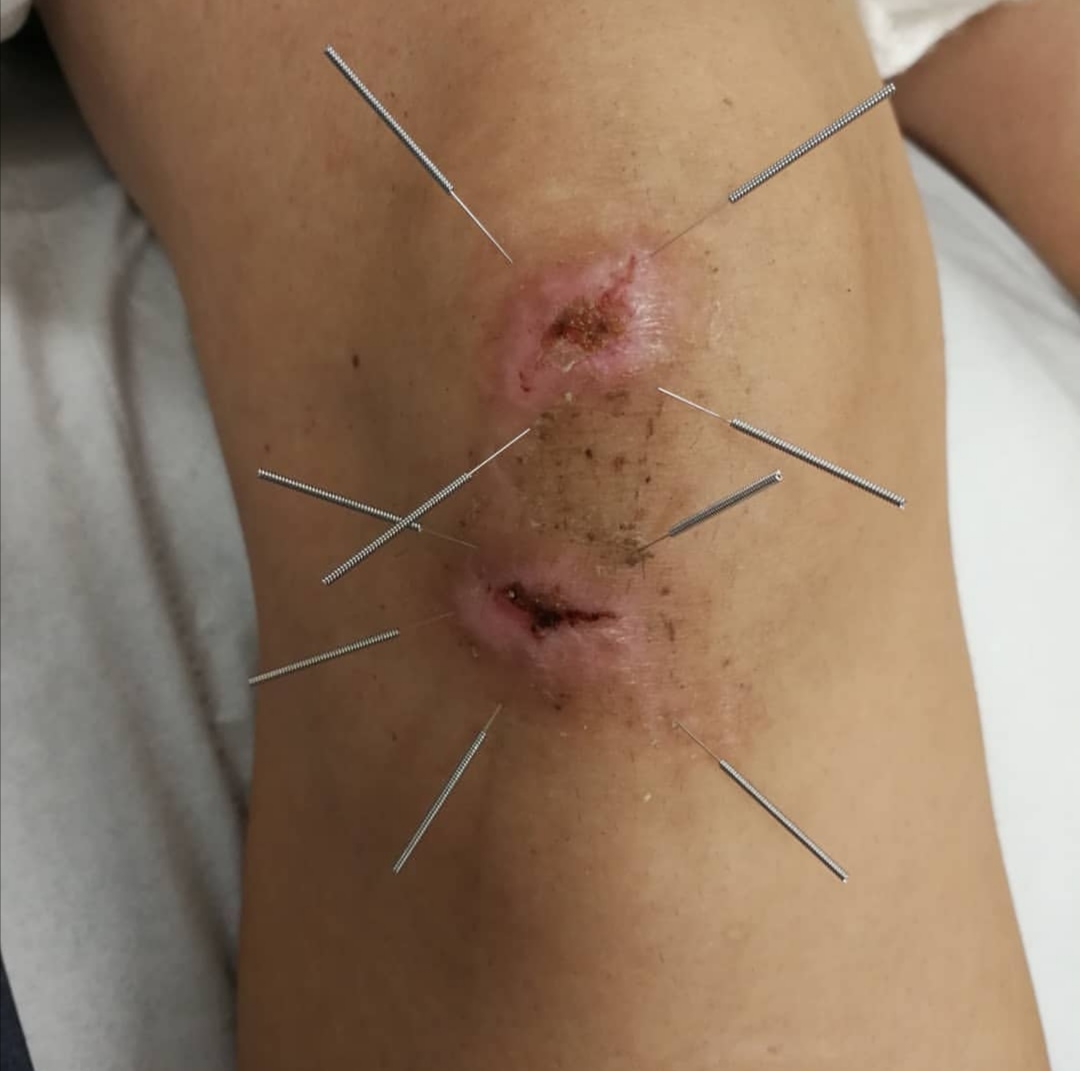
In the clinic, I often use a technique called "Surrounding the Dragon." By placing needles around the perimeter of a scar (see image below for an example) we encourage blood flow to the area and support the body’s natural inflammatory response. It’s a powerful way to wake up the skin encouraging cell repair and promote collagen reorganization.
The Transition to Topical Care
While needles do the heavy lifting in my office, what happens at home is just as vital. Once a wound is fully sealed—no oozing, no leaking, and no risk of opening—massage becomes the secret weapon.
I wanted my clients to have something specifically designed for this "massage phase." That’s why I developed The Eight: Targeted Skin Renewal Oil.
Why These Ingredients?
While I can’t make "magic" claims, I can tell you why I chose this specific blend. I am incredibly proud of this formula, which features:
-
Black Seed Oil: Rich in antioxidants to support skin texture.
-
Liquorice Extract: Known for its ability to help even out skin tone and diminish the look of blemishes.
-
Helichrysum Oil: Often called the "Everlasting Flower," it is prized in high-end skincare for its rejuvenating properties.
Is Your Skin Ready for Massage?
Timing is everything. If a scar is fresh or still healing (like in my clinical "needling" phase), it’s hands-off. But once the skin is closed and silvered, a daily massage with a nutrient-rich oil can significantly improve the softness, suppleness, and overall appearance of the area.
-
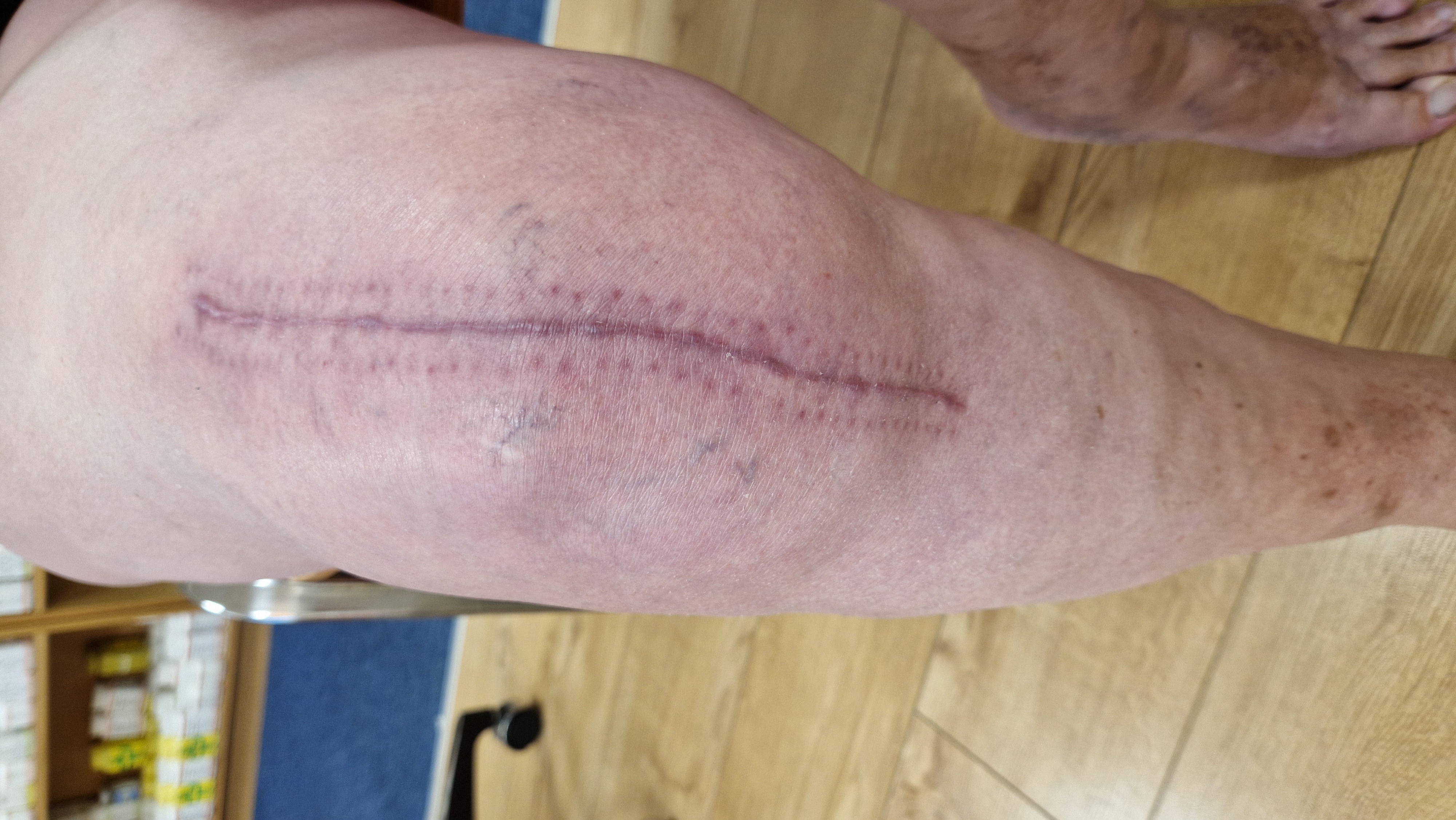
Scar Massage Routine
(Use once or twice daily after the scar has closed and your practitioner or surgeon has confirmed it’s safe to begin.)
🔸 Step 1 – Prepare
- Wash and warm your hands.
- Begin without oil — dry work first helps loosen the fascia and prepare the scar.
🔸 Step 2 – Dry Myofascial Release
- Hold & Connect – Place your hands gently over the scar area without pressure. Pause, breathe deeply, and let your body feel safe. This touch matters.
- Lifts & Holds – Gently lift the skin at the edges of the scar and hold for a few seconds before releasing.
- S-Shapes – Anchor one end of the scar with one hand, and with the other hand, make slow S-shaped movements across or along the scar to free up stuck tissue.
- Skin Stretching – Lightly stretch the skin around the scar in different directions, without pulling the scar line itself.
This stage helps the layers under the skin to “unstick,” encouraging flexibility and comfort.
🔸 Step 3 – Apply Oil
- Place 1–3 drops of scar oil onto your fingertips.
- Warm it by rubbing your hands together.
- Using feather-light strokes, glide the oil over the scar and surrounding tissue.
- Work outward from the centre in slow, circular motions to awaken circulation.
🔸 Step 4 – Skin Rolling & Lifting (With Oil)
- Gently pinch or lift the skin beside the scar, rolling it softly between your fingers.
- If an area feels tight or stuck, hold it gently for a few seconds before releasing.
- Avoid pulling or overstretching the scar itself.
🔸 Step 5 – Cross-Fibre Movement (For Older Scars Only)
- From 6–8+ weeks post-surgery, use small, slow side-to-side motions across the scar.
- This helps realign tissue fibres and reduce thickening.
- Keep pressure very light — this should never hurt.
🔸 Step 6 – Finish with Stillness
- Place a flat palm gently over the scar area.
- Pause and allow the warmth of your hand to settle into the skin.
- Take a moment of calm before finishing.
💬 Tips
- Less is more — scars respond best to gentle, consistent touch, not force.
- Aim for a few minutes daily or several times a week, rather than occasional deep work.
- Always follow medical guidance for post-op healing before beginning massage.
- If the scar is painful, red, or inflamed, pause and consult a professional before resuming.
Some science:
*https://pmc.ncbi.nlm.nih.gov/articles/PMC8400224/
Formulation and Evaluation of Helichrysum italicum Essential Oil-Based Topical Formulations for Wound Healing in Diabetic Rats
*https://www.sciencedirect.com/science/article/abs/pii/S0278691521006992
Linking the antimicrobial and anti-inflammatory effects of immortelle essential oil with its chemical composition – The interplay between the major and minor constituents
*https://pmc.ncbi.nlm.nih.gov/articles/PMC10945318/
The Effects of Helichrysum italicum Extract on the Extracellular Matrix of the Skin
*https://pubmed.ncbi.nlm.nih.gov/41574532/
Uncovering the Potential Pharmacological Mechanisms Regarding Anti-scarring Effects of Glycyrrhizic Acid Isolated from the Glycyrrhiza Glabra Based on Bioinformatics Combined Animal Experiment
*https://www.rjptonline.org/HTMLPaper.aspx?Journal=Research%20Journal%20of%20Pharmacy%20and%20Technology;PID=2024-17-9-2
Effectivity and Evaluation of Licorice Root (Glycyrrhiza glabra) Extract Serum Formula as a Facial Brightening